Help their curiosity become confidence.
Help their curiosity become confidence.
Help their curiosity become confidence.
Help their curiosity become confidence.
Screen-free, hands-on design challenges that help children notice more, imagine freely, shape their own ideas, and trust where those ideas lead.
Screen-free, hands-on design challenges that help children notice more, imagine freely, shape their own ideas, and trust where those ideas lead.
Kids already see possibility everywhere.
Kids already see possibility everywhere.
Kids already see the world differently.
They ask why again and again, notice patterns, meaning, and details adults often miss.
This 10-minute free printable challenge gives that kind of thinking somewhere to begin.
Use it when you need something simple:
Read the prompt, let them explore, and resist fixing the outcome.
Just see where their thinking goes.
They ask why again and again, notice patterns, meaning, and details adults often miss.
This 10-minute free printable challenge gives that kind of thinking somewhere to begin.
Use it when you need something simple:
Read the prompt, let them explore, and resist fixing the outcome.
Just see where their thinking goes.
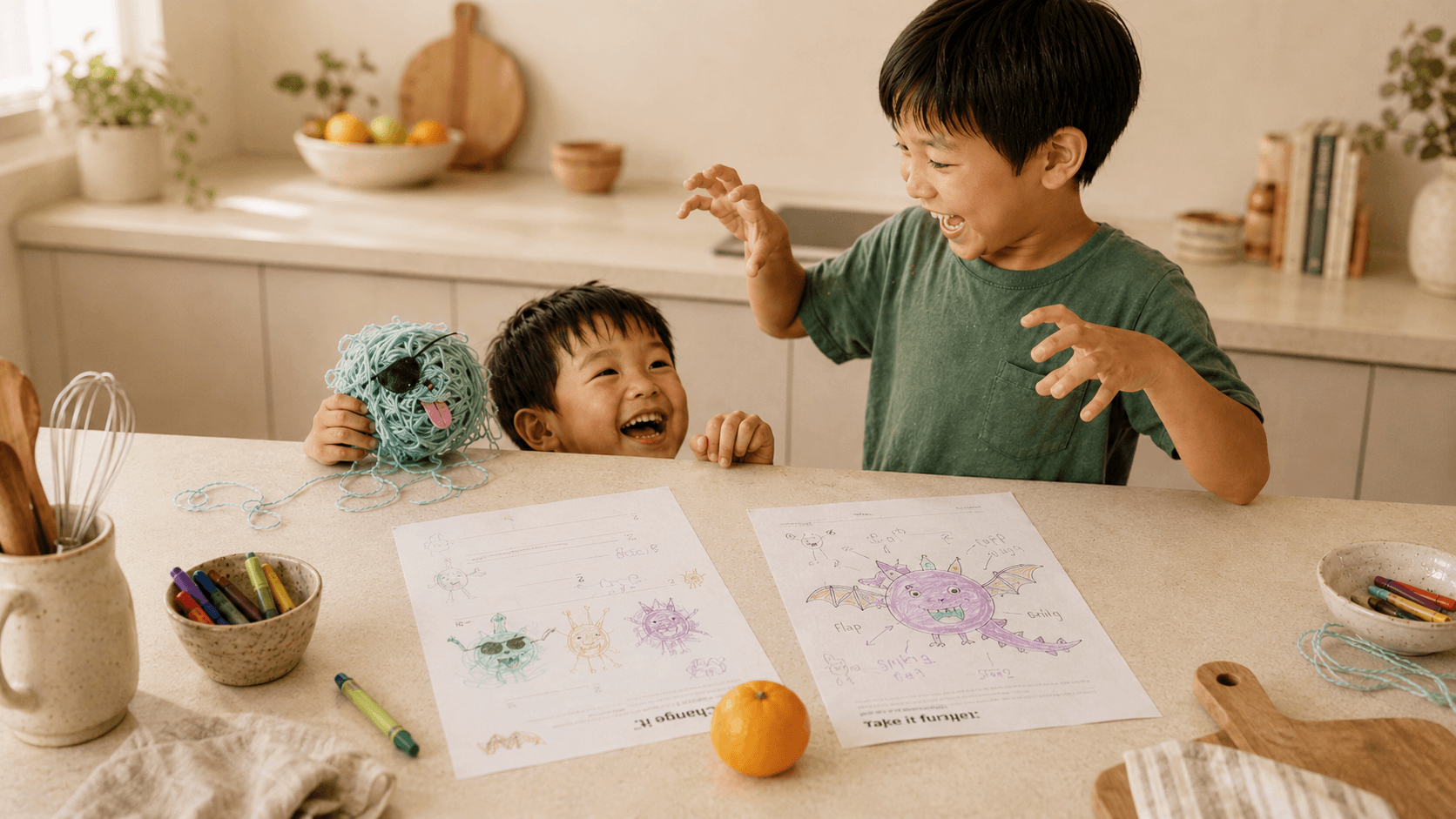
Screen-free | Ages 4–8 | Instant Download
Screen-free | Ages 4–8 | Instant Download
Screen-free | Ages 4–8 | Instant Download
A simple question.
A growing habit.
A simple question.
A growing habit.
No setup. No right answer.
Read the card. Step back. Notice what they do next.
You don't need to teach creativity, just give it room to grow.
No setup. No right answer.
Read the card. Step back. Notice what they do next.
You don't need to teach creativity, just give it room to grow.

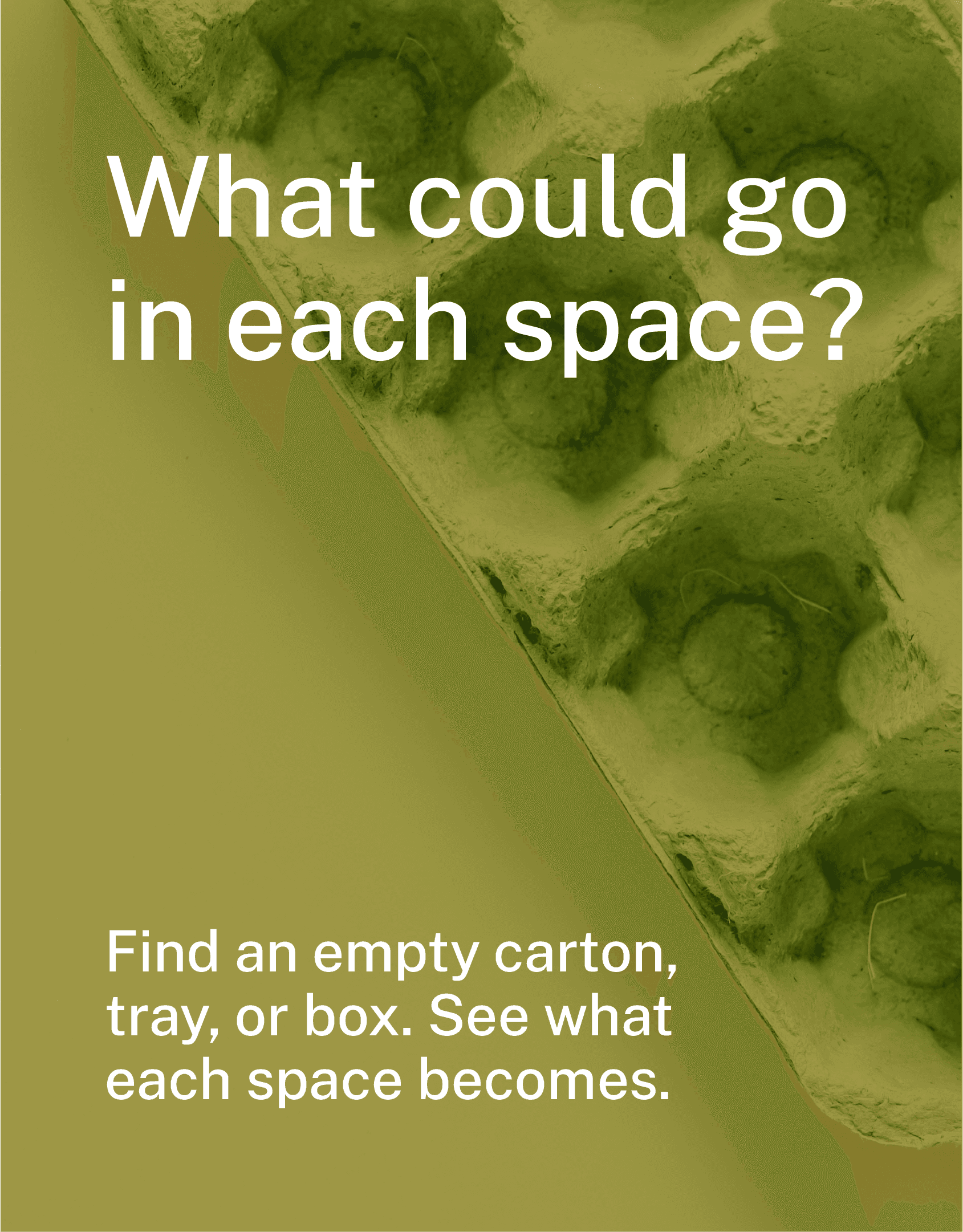
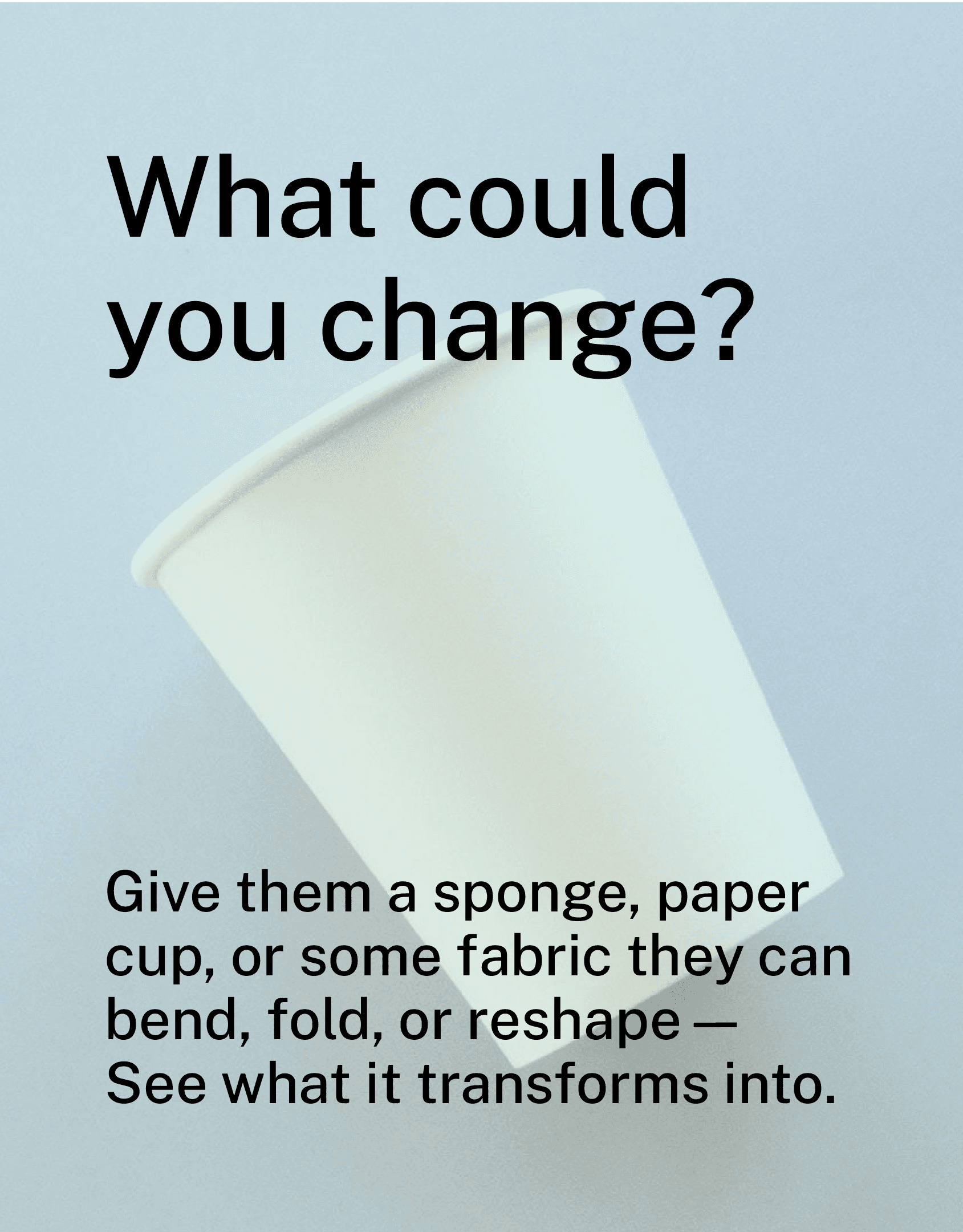
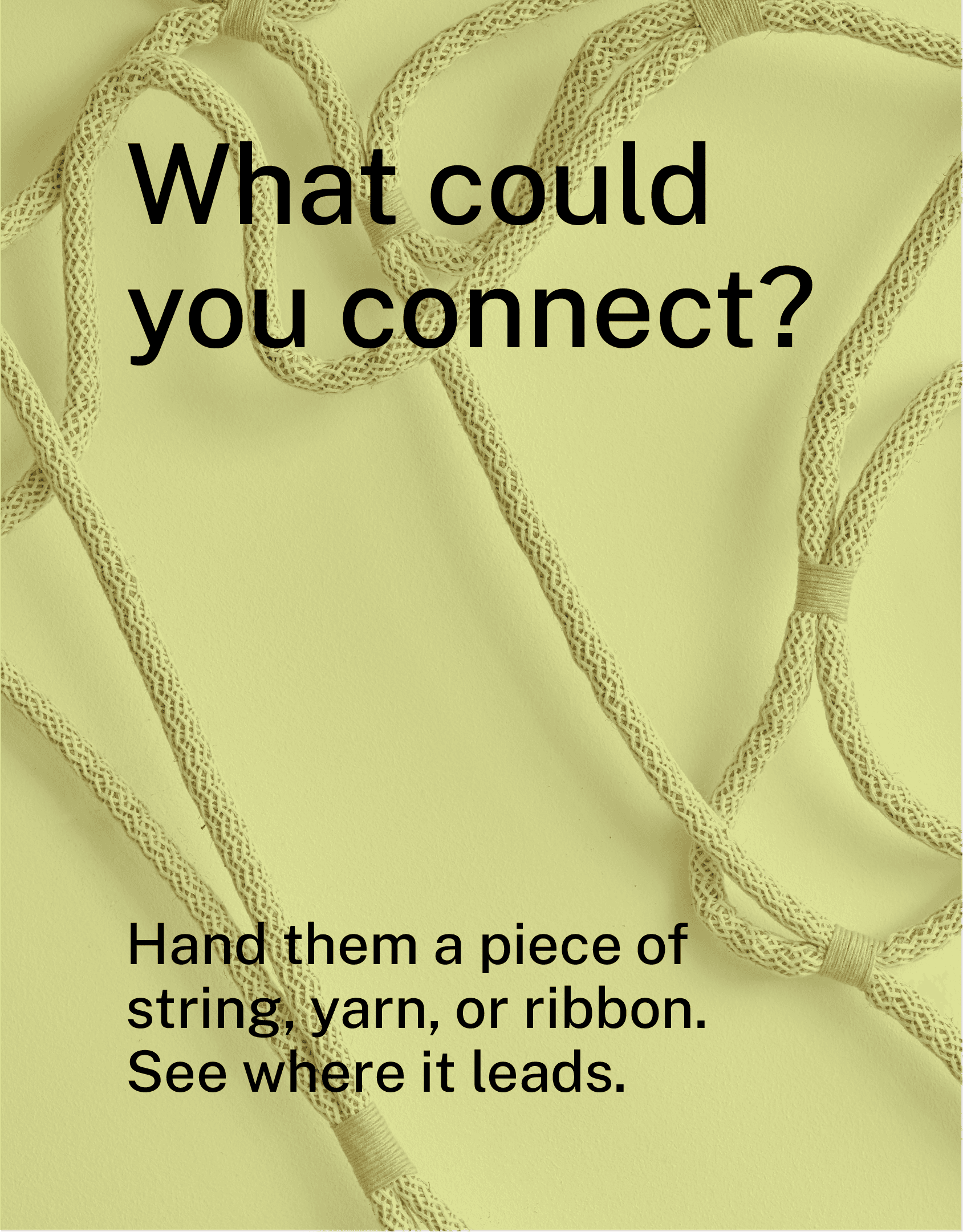
Each card gives kids a small way to see, wonder, change, try, or grow an idea.
Try one with your child.
Each card gives kids a small way to see, wonder, change, try, or grow an idea.
Try one with your child.
A simple way to help ideas grow.
The Sprig Method™ is a thinking pattern adapted from how designers, scientists, and problem-solvers work — translated for childhood. It helps children notice, wonder, explore, test, change, and build from there. This small loop behind every challenge is the beginning of creative confidence.
The Sprig Method™ is a thinking pattern adapted from how designers, scientists, and problem-solvers work — translated for childhood. It helps children notice, wonder, explore, test, change, and build from there. This small loop behind every challenge is the beginning of creative confidence.
The Sprig Method™ is a thinking pattern drawn from designers, scientists, and problem-solvers— natural enough for a four-year-old's play, deep enough to grow with them as a way of thinking.
The Sprig Method™ is a thinking pattern drawn from designers, scientists, and problem-solvers— natural enough for a four-year-old's play, deep enough to grow with them as a way of thinking.
seeprobereimagineiterategrow
seeprobereimagineiterategrow
seeprobereimagineiterategrow
seeprobereimagineiterategrow
What they are building behind the play.
What they are building behind the play.
Success might look smaller than you expect.
A new observation. A changed idea. A “mistake” turned into something else. A strange story. A project they don’t finish, but keep thinking about.
These small moments are where bigger thinking habits begin: curiosity, confidence, empathy, resilience, flexible thinking, and problem-solving.
Success might look smaller than you expect.
A new observation. A changed idea.
A “mistake” turned into something else.
A strange story. A project they don’t finish, but keep thinking about.
These small moments are where bigger thinking habits begin: curiosity, confidence, empathy, resilience, flexible thinking, and problem-solving.
Success might look smaller than you expect.
A new observation. A changed idea. A “mistake” turned into something else. A strange story. A project they don’t finish, but keep thinking about.
These small moments are where bigger thinking habits begin: curiosity, confidence, empathy, resilience, flexible thinking, and problem-solving.
Curiosity
They stay with a question longer than expected — noticing, wondering, and looking again.
Flexible thinking
They begin to see more than one possibility — trying different ways instead of stopping at the first.
Resilience
They practice staying with something frustrating. Over time, persistence makes difficult things feel approachable.
Confidence
They stop waiting to be told what to do — and begin acting on their own ideas. That’s where self-belief grows.
Empathy
They form their own point of view — while learning that others may see things differently.
Critical Thinking
They learn to figure things out independently — discovering there isn’t always one right answer.
Curiosity
They stay with a question longer than expected — noticing, wondering, and looking again.
Flexible thinking
They begin to see more than one possibility — trying different ways instead of stopping at the first.
Resilience
They practice staying with something frustrating. Over time, persistence makes difficult things feel approachable.
Confidence
They stop waiting to be told what to do — and begin acting on their own ideas. That’s where self-belief grows.
Empathy
They form their own point of view — while learning that others may see things differently.
Critical Thinking
They learn to figure things out independently — discovering there isn’t always one right answer.
Curiosity
They stay with a question longer than expected — noticing, wondering, and looking again.
Flexible thinking
They begin to see more than one possibility — trying different ways instead of stopping at the first.
Resilience
They practice staying with something frustrating. Over time, persistence makes difficult things feel approachable.
Confidence
They stop waiting to be told what to do — and begin acting on their own ideas. That’s where self-belief grows.
Empathy
They form their own point of view — while learning that others may see things differently.
Critical Thinking
They learn to figure things out independently — discovering there isn’t always one right answer.
Made for real life, not perfect setups.
Made for real life, not perfect setups.
Screen-free challenges for after-school resets, rainy days, homeschool tables, classrooms, siblings, grandparents, and moments when you need something better than another screen.
Screen-free challenges for after-school resets, rainy days, homeschool tables, classrooms, siblings, grandparents, and moments when you need something better than another screen.
Easy to begin.
Built to deepen.
Easy to begin.
Built to deepen.
Easy to begin.
Built to deepen.
Start with a shape, object, question, or material. Grow it into stories, worlds, maps, conversations, and longer creative projects.
Start with a shape, object, question, or material. Grow it into stories, worlds, maps, conversations, and longer creative projects.


Screen-free,
hands-on thinking.
Screen-free,
hands-on thinking.
Screen-free,
hands-on thinking.
Something active to do with their hands, eyes, voice, imagination, and the world around them.
Something active to do with their hands, eyes, voice, imagination, and the world around them.
Flexible for different
kids and settings.
Flexible for different
kids and settings.
Flexible for different
kids and settings.
Flexible for different kids and settings.
Some kids jump in. Some observe first. Use it solo, with siblings, as a family, around a homeschool table, or in a classroom.
Some kids jump in. Some observe first. Use it solo, with siblings, as a family, around a homeschool table, or in a classroom.


Process,
not performance.
Process,
not performance.
Process,
not performance.
Process, not performance.
No right answer. No perfect outcome.
The value is in questioning, experimenting, and seeing where thinking can lead. For grown-ups, that means less correcting, more noticing.
No right answer. No perfect outcome. The value is in questioning, experimenting, and seeing where thinking can lead.
No right answer. No perfect outcome. The value is in questioning, experimenting, and seeing where thinking can lead.
One method. Many ways in.
One method.
Many ways in.
One method.
Many ways in.
Different experiences, all rooted in the Sprig Method™.
More ways for creative thinking to grow with your child.
Different experiences, all rooted in the Sprig Method™.
More ways for creative thinking to grow with your child.
Different experiences, all rooted in the Sprig Method™.
More ways for creative thinking to grow with your child.
ThinkSprig™ was created by a Brand Design Strategist and Creative Director who has spent nearly two decades helping teams turn messy ideas into clear stories, systems, and experiences — and wanted children to access those same thinking habits early.
Developed with input from educators and child-development specialists, ThinkSprig™ sits between real-world creative practice and how children naturally learn: through noticing, asking, making, testing, and play.

ThinkSprig™ was created by a Brand Design Strategist and Creative Director who has spent nearly two decades helping teams turn messy ideas into clear stories, systems, and experiences — and wanted children to access those same thinking habits early.
Developed with input from educators and child-development specialists, ThinkSprig™ sits between real-world creative practice and how children naturally learn: through noticing, asking, making, testing, and play.
ThinkSprig™ was created by a Brand Design Strategist and Creative Director who has spent nearly two decades helping teams turn messy ideas into clear stories, systems, and experiences — and wanted children to access those same thinking habits early.
Developed with input from educators and child-development specialists, ThinkSprig™ sits between real-world creative practice and how children naturally learn: through noticing, asking, making, testing, and play.
Real-world creative thinking and innovation — built for childhood.
Real-world creative thinking and innovation — built for childhood.
Real-world creative thinking and innovation — built for childhood.
When a child turns a circle into a creature, gives a lost object a home, or decides a cardboard box needs a secret entrance, they are doing more than making something cute.
ThinkSprig™ takes the creative process used by designers, inventors, scientists, and problem-solvers, and translates it into story-rich experiences children can actually enter.
Not as a lesson.
Not as a worksheet.
As a way of seeing, making, and growing ideas.
Simple enough for a 4-year-old.
Powerful enough to grow with them.
When a child turns a circle into a creature, gives a lost object a home, or decides a cardboard box needs a secret entrance, they are doing more than making something cute.
ThinkSprig™ takes the creative process used by designers, inventors, scientists, and problem-solvers, and translates it into story-rich experiences children can actually enter.
Not as a lesson.
Not as a worksheet.
As a way of seeing, making,
and growing ideas.
Simple enough for a 4-year-old.
Powerful enough to grow with them.
Start small. Watch the thinking grow.
Start small. Watch the thinking grow.
Start with one small shape.
Join the ThinkSprig™ launch list for free creative challenges, future card decks, journals, and simple ways to grow independent thinking through everyday creativity.
Start with one small shape.
Join the ThinkSprig™ launch list for free creative challenges, future card decks, journals, and simple ways to grow independent thinking through everyday creativity.
Start with one small shape.
Join the ThinkSprig™ launch list for free creative challenges, future card decks, journals, and simple ways to grow independent thinking through everyday creativity.

ThinkSprig | Unframe LLC
418 Broadway, Ste N, Albany, NY, 12207, USA
© 2026 Unframe LLC. ThinkSprig™ is a trademark of Unframe LLC. All rights reserved.
ThinkSprig | Unframe LLC
418 Broadway, Ste N,
Albany, NY, 12207, USA
© 2026 Unframe LLC.
ThinkSprig™ is a trademark of Unframe LLC.
All rights reserved.
ThinkSprig | Unframe LLC
418 Broadway, Ste N, Albany, NY, 12207, USA
© 2026 Unframe LLC.
ThinkSprig™ is a trademark
of Unframe LLC. All rights reserved.
ThinkSprig | Unframe LLC
418 Broadway, Ste N, Albany, NY, 12207, USA
© 2026 Unframe LLC. ThinkSprig™ is a trademark of Unframe LLC. All rights reserved.
ThinkSprig | Unframe LLC
418 Broadway, Ste N,
Albany, NY, 12207, USA
© 2026 Unframe LLC.
ThinkSprig™ is a trademark of
Unframe LLC. All rights reserved.